A walking tour in Bukhara by Local Guide
📍 Starts: QCFC+5PG, Bukhara · Guide: Maks
Book free spot Free · pay what you like
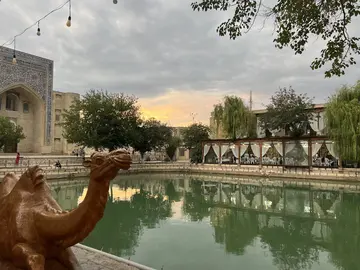
A pond shaded by mulberry trees, bazaars under brick domes and one astonishing minaret. Bukhara is best explained on foot.
Booking reserves your place; nothing is charged. Ratings and review counts from GuruWalk, updated 19 November 2026.
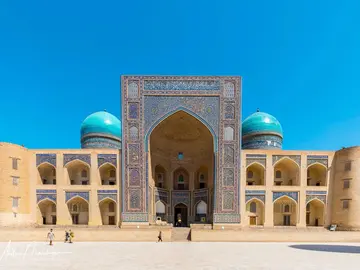
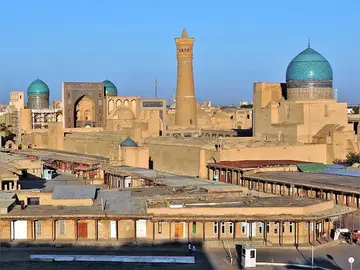
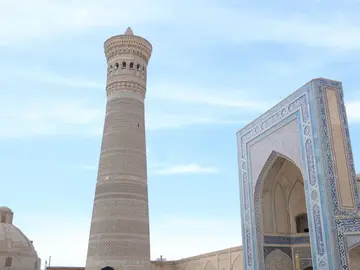
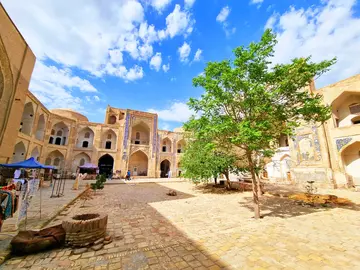
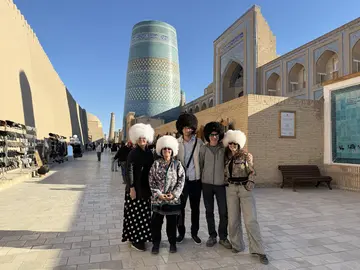
Bukhara's old town has kept its shape. The bazaars still sit where the caravan roads crossed, houses still turn blank mud walls to the lane, and cars barely intrude on the core. A free walking tour in Bukhara nearly always begins at Lyabi-Hauz, the old pool framed by the Nadir Devonbegi and Kukaldosh madrasas. From there guides thread through the domed markets, named after money-changers, cap-makers and jewellers, to the sunken Magoki Attori mosque, the facing madrasas of Ulugbek and Abdulaziz Khan, and the great courtyard of Poi Kalon with its 12th-century minaret.
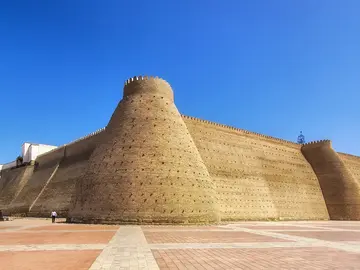
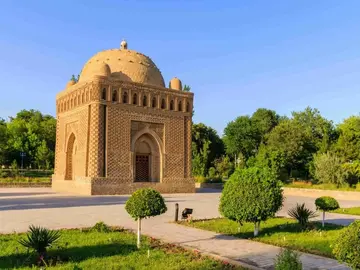
After that the walks differ. Some finish at the sloping walls of the Ark, once home to the emirs, or across the road at the painted columns of the Bolo-Hauz mosque. The longer ones carry on to the Chashma-Ayub spring and the 10th-century Samanid Mausoleum, a small brick cube that many visitors end up liking best. Count on three to four hours. One English guide adds the Jewish quarter with its synagogue, plus embroidery and metal workshops, while a short specialist visit stays inside the Ark.
Almost all Bukhara walking tours are in English; there is one in Italian, centred on trade and the Silk Road. Entry to the paid monuments, usually one or two of them, is extra. Several guides say so in their listings, and it is worth asking which doors you will go through. The streets, the squares and the outside of every building cost nothing to enjoy.
The complete old-town walk, about three and a half hours in English, for a first day in the city. It meets by the entrance of the Nadir Devonbegi madrasa; a four-hour version from Kukaldosh covers much the same ground.
A little over three hours in English, with more crafts and domestic history between the monuments. Look for the guide on the steps by the tourist police box at Lyabi-Hauz.
An hour and three-quarters in English for travellers who like museums and court stories. It starts near the Bolo-Hauz mosque, across the road from the gate, and needs a museum ticket.
Spring and autumn suit a half-day on foot, and that is when the hotels fill up. High summer brings desert heat: set out soon after breakfast, rest through the afternoon and come out again at dusk, when families gather round the pool. Winter days can be bright but sharp, and the covered bazaars help.
The western end, from the Ark to the Samanid Mausoleum, has the least shade, so a tour that gets there before noon is kinder in hot months. Poi Kalon is worth a second visit once the minaret is floodlit.
Roughly 3.5 km from east to west, flat all the way. Two hours for the exteriors, half a day with visits.