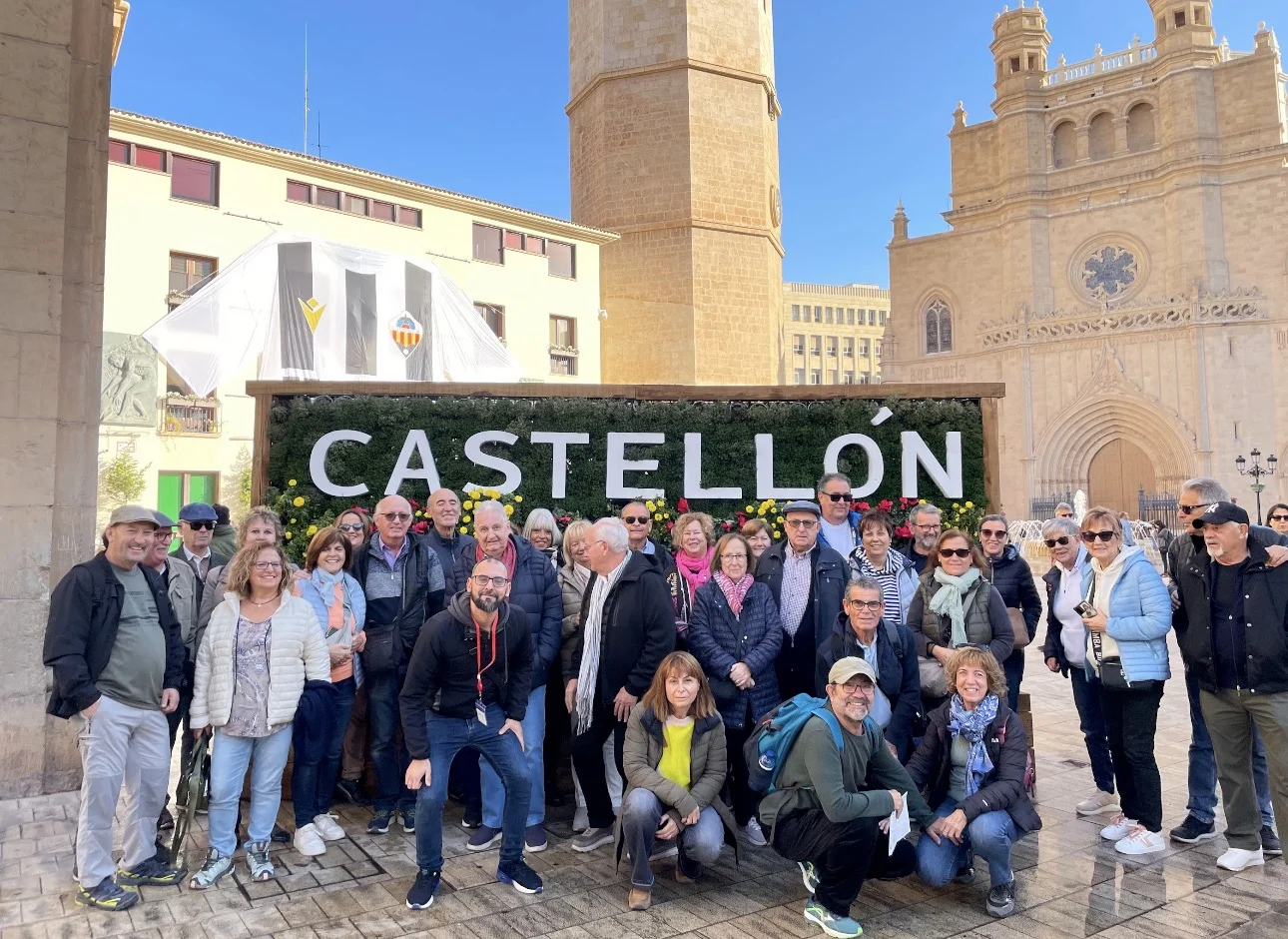
Amazing Free Tour of the Historic Centre of Castellón.
📍 Starts: Pl. Independencia / Farola, 12001 Castellón de la Plana · Guide: Carlos
Book free spot Free · pay what you like
A free-standing Gothic bell tower and a festival of lanterns. Three tours run in Spanish, one also in French.
Booking reserves your place; nothing is charged. Ratings and review counts from GuruWalk, updated 19 November 2026.
Castelló de la Plana, to give it its Valencian name, was born in the 13th century when the people of a hilltop castle moved down to the coastal plain with the blessing of King Jaume I. Each spring the Magdalena festival re-enacts that move with a pilgrimage up to the hermitage and parades of glowing gaiates. The centre is compact and flat, with a Gothic co-cathedral, a free-standing bell tower and streets of early 20th-century modernist façades. Few foreign visitors stop here, so a free walking tour of Castellón feels very local.
There are three tip-based walking tours of Castellón, all around two hours. None is in English: one runs in Spanish and French, with Valencian too, and the other two are in Spanish. The bilingual tour is a loop from the entrance to Ribalta Park past the Farola, the post office on Plaza Tetuán, an air-raid shelter, Plaza de la Hierba and the old hemp exchange, then Plaza Mayor with the Town Hall, the co-cathedral of Santa María and the Fadrí, before returning by Puerta del Sol and Plaza Huerto Sogueros. A second walk covers similar ground from Plaza de la Paz, beside the Teatro Principal, and ends at Plaza Santa Clara; the third mixes history with legends and grisly curiosities from Plaza de la Hierba.
If you need English, follow our self-guided route below. Valencia lies down the coast; see all of Spain.
Two hours in Spanish, French and Valencian, a circular walk that starts and ends at the park entrance on Plaza de la Independencia.
Two hours in Spanish from Plaza de la Paz, with more on architecture and art, and a visit to the co-cathedral.
Castellón has a mild Mediterranean climate. Summer days are hot and humid, so prefer the late-afternoon or evening walks then; the rest of the year any slot works.
The Magdalena festival, in March during Lent, is the liveliest week of the year, with fireworks, parades and crowds in the centre. It is a great time to visit, but expect closed streets and book beds early.
About 2.5 km and 90 minutes in English, a loop from Ribalta Park through the old centre and back.