Free walking tours in Luxor

Luxor's tip-based tours are guided temple and tomb visits rather than street walks. Here is what each involves.

  • 🚶 5 free tours
  • ★ 4.81 average
  • 💬 265 reviews
  • 🗣 English, Spanish, ARA

Tip-based tours in Luxor

Booking reserves your place; nothing is charged. Ratings and review counts from GuruWalk, updated 19 November 2026.

What a Luxor tour with a local guide covers

Luxor stands on the site of ancient Thebes, the religious capital of Egypt's New Kingdom, and its temples and tombs are among the greatest monuments of the ancient world. That shapes the tours. Instead of a classic free walking tour of Luxor through the streets, local guides offer tip-based visits to the sites themselves. You pay the guide what you think the visit was worth, but every temple and tomb has its own entry ticket, paid separately.

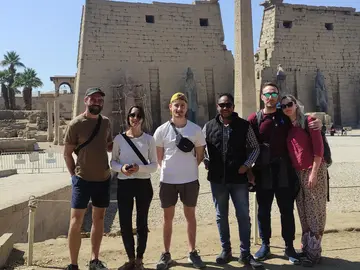
Most listings cover the East Bank, where the town is. Guides meet at the Karnak visitor centre or its ticket office and spend around three hours between Karnak, with its forest of columns in the Great Hypostyle Hall, its obelisks and sacred lake, and Luxor Temple, about three kilometres south. You can link the two along the Avenue of Sphinxes on foot, or by car or horse carriage. One guide also offers an evening version inside Luxor Temple, when it is floodlit, followed by the souq.

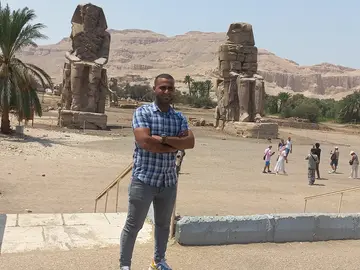
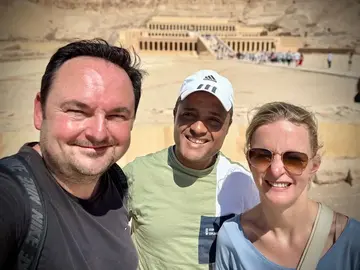
The West Bank tour is a different kind of day: it meets at the Colossi of Memnon and uses a car between the Valley of the Kings, the temple of Hatshepsut at Deir el-Bahari and, if you want more, Medinet Habu, the Valley of the Queens and the Tombs of the Nobles. There is also a two-and-a-half-hour bike ride through West Bank villages and fields to a sunset view, with a separate bike rental fee. Tours run in English, with one guide working in Spanish and the bike tour also in Arabic. For a walk on your own, the self-guided route below follows the corniche between the two great temples.

The visits Luxor guides lead

Karnak and Luxor Temple (ticketed site visit)

About three hours on the East Bank, meeting at the Karnak visitor centre. Most of the walking is inside the temples; the stretch between them can be on foot or by car or carriage. An evening version covers Luxor Temple and the souq.

  1. Karnak Great Hypostyle Hall
  2. Obelisks of Hatshepsut and Thutmose I
  3. Karnak sacred lake
  4. Avenue of Sphinxes
  5. Luxor Temple
  6. Luxor souq

West Bank tombs and temples (by car)

Three and a half hours or more, meeting at the Colossi of Memnon. A car links the sites, and each one is ticketed, with extra tickets for some tombs.

  1. Colossi of Memnon
  2. Valley of the Kings
  3. Temple of Hatshepsut
  4. Medinet Habu
  5. Valley of the Queens
  6. Tombs of the Nobles

West Bank villages by bike

A two-and-a-half-hour ride from the public ferry landing on the West Bank through farmland and villages towards the hills, ending at sunset. It is a bike tour, not a walk, and bike rental is paid on the day. The listing doesn't name its stops.

When to visit Luxor's temples with a guide

October to April is the comfortable season. From May to September Luxor is fiercely hot, and the shade inside the temples is limited, so take the earliest slot you can, or the evening visit to Luxor Temple. The West Bank is hotter still around midday.

Winter is also the busiest time, with large groups at Karnak and the Valley of the Kings by mid-morning. Arriving at opening time, or booking a late-afternoon slot, gives you calmer temples and softer light.

Good to know

  • Carry plenty of water, a hat and sunscreen; the temples are vast and mostly open to the sky.
  • Keep cash and a card for tickets, and ask your guide which tombs your ticket includes before you enter.
  • The public ferry across the Nile is the simplest way to reach the West Bank meeting points from the town.
  • Agree the price before you take a horse carriage, felucca or taxi, and expect to be offered all three often.
  • Wear sturdy shoes; temple floors are uneven stone and the tomb steps are steep.
  • Check your government's current travel advice for Egypt before you go.

Self-guided walk on Luxor's East Bank

About 4 km and two and a half hours on foot, from the riverside south of Luxor Temple to Karnak, plus whatever time you spend inside. Walk it early in the morning or in the late afternoon.
  1. Mummification Museuma small museum on the corniche, a good first look at how and why the Egyptians preserved their dead.
  2. Luxor Templethe colonnades and seated statues of Ramesses II, partly visible from the street even if you don't go in.
  3. Abu el-Haggag Mosquethe mosque built on top of the ancient temple, its doorway now high above the excavated floor.
  4. Avenue of Sphinxeslook north from Luxor Temple along the processional road that once ran all the way to Karnak.
  5. Luxor souqthe market street behind the temple, full of spices, scarves and alabaster; bargain with a smile.
  6. Corniche el-Nilwalk north along the river, with feluccas below and the cliffs of the West Bank across the water.
  7. Luxor Museuma calm, well-lit collection of statues and objects found in the Theban temples and tombs.
  8. Karnak Templefinish at the vast temple complex of Amun, with its hypostyle hall and sacred lake.

Luxor free tours: questions people ask

Is there a free walking tour in Luxor?
Not a classic street walk. Luxor's tip-based tours are guided visits to Karnak, Luxor Temple and the West Bank, plus a village bike ride. You tip the guide at the end, usually around US$10–15 per adult, and pay entry tickets separately. See how it works.
Can you walk between Karnak and Luxor Temple?
Yes. The two temples are about three kilometres apart, linked by the Avenue of Sphinxes and the riverside corniche. Some guides walk it with you; others prefer a car or carriage in the heat.
What is the best Luxor walking tour for a first visit?
Start with the East Bank visit to Karnak and Luxor Temple, which is the closest thing to a walking tour here, then add the West Bank day for the Valley of the Kings and Hatshepsut's temple.
Do I need a car for the West Bank?
Yes, for the main sites. The Valley of the Kings, Deir el-Bahari and Medinet Habu are spread out, so the West Bank tour uses a car between them. The bike tour is the alternative for village scenery rather than tombs.
Are Luxor tours available in English?
Yes, most of them. One guide works in Spanish, and the bike tour runs in English and Arabic.
Can I explore Luxor on my own?
Yes. Our self-guided route above covers about 4 km on the East Bank, from the Mummification Museum past Luxor Temple and the souq to Karnak. Temple and museum tickets are sold separately.

More free tours in Egypt

All Egypt cities →
Book a free tour in Luxor