Mérida: The Best Free Tour of Mérida!!
📍 Starts: C/ José Ramón Mélida, s/n · Guide: JARECA FREE TOURS
Book free spot Free · pay what you like
Roman Emerita Augusta, Spain's richest Roman city, in Extremadura. Tours here are in Spanish; our route below is in English.
Booking reserves your place; nothing is charged. Ratings and review counts from GuruWalk, updated 19 November 2026.
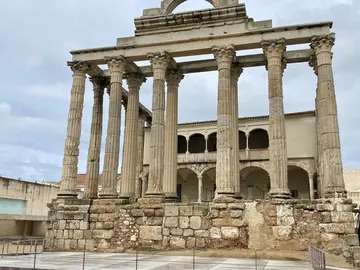
This page is about Mérida in Extremadura, Spain. Looking for the Yucatán capital? See Mérida, Mexico. Spain's Mérida was founded by Augustus as Emerita Augusta, capital of the Roman province of Lusitania, and no city in Spain keeps more of its Roman past: a theatre and amphitheatre, temples, a forum, a triumphal arch, aqueducts and a long bridge over the Guadiana, all part of a UNESCO World Heritage Site.
There are five tip-based tours, all in Spanish. The classic route starts at the National Museum of Roman Art on Plaza Margarita Xirgu, opposite the entrance to the theatre and amphitheatre. It goes to the Portico of the Forum and the Temple of Diana, then down to the Alcazaba, the Moorish fortress beside the Roman bridge. It returns through Plaza de España and the Convent of Santa Clara to the Arch of Trajan, the Calatrava market and the Puerta de la Villa. Another tour starts at the Puerta de la Villa and follows the old Roman main street to the Temple of Imperial Worship and the co-cathedral of Santa María.
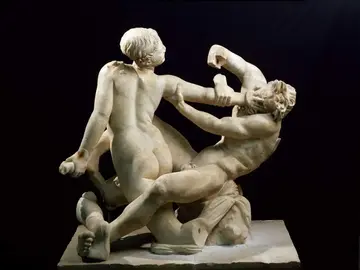
Two tours take a different angle: a night walk of myths and Guadiana legends led in character, and a Roman tour on sex, taboo and ritual in antiquity. Under Extremadura's tourism rules, guides must charge a small fixed fee per person, shown on each listing; the tip comes on top. Mérida pairs well with Cáceres to the north and Seville to the south; see all of Spain.
About 1 hour 45 minutes in Spanish, a loop from the National Museum of Roman Art through the forum and down to the river.
Two hours in Spanish from the Puerta de la Villa, along the old Roman main street and through the religious heart of the city.
A two-hour night walk in Spanish from the Méridas del Mundo park; the listing doesn't name its stops.
Mérida has some of the hottest summers in Spain. From June to September, take a morning tour or the night legends walk, and save the open-air ruins for early or late in the day. Spring and autumn are the best seasons; winter is mild and quiet.
In summer the Roman theatre hosts a long-running classical theatre festival, and evening performances on the ancient stage are a fine way to end a day of walking.
About 2.5 km and two hours with stops, from the Roman bridge through the centre to the theatre, mostly level.