Free walking tours in Rio de Janeiro
Imperial palaces, a tiled staircase and hilltop Santa Teresa. See Rio beyond the beach with a local guide, then tip.
- 🚶 23 free tours
- ★ 4.83 average
- 💬 2,798 reviews
- 🗣 English, Spanish, Portuguese +1
Top free walking tours in Rio de Janeiro
Rocinha Favela Local Tour
Free Tour of Rio de Janeiro: Secrets of the Center, from Royalty to Bohemia
Free Tour in Santa Teresa and Selarón Staircase
Little Africa: African Resistance and Culture in Brazil
Experience Rio: Barra da Tijuca and the Gigóia Islands Food and Drinks Walking Tour!
Rio Like a Local: History, Hidden Gems & Real Carioca Stories
Rio in Every Step: Experience the City's Pulse on our Free Walking Tour
Women in Rio - a different walking tour
Santa Teresa: Unveiling Rio's Historic Hilltop
Oh Meu Deus! A Crazy Tour in Rio
Rio's Little Africa: Heritage and Soul
“The River You Didn’t Expect: Free Cultural Tour: History, Art and Local Essence”
A journey through time, from Selarón to Mña - in Portuguese-Spanish
Cultural tour and tourist attractions - Rio de Janeiro
Rio de Janeiro: Special Favela Tour Between Copacabana and Ipanema
Rio de Janeiro Historic Downtown Free Walking Tour
One morning discovering Rio's downtown history
Free walking tour through the historic center of Rio de Janeiro
"From Leme to Pontal" Feel the breeze, Beach, Sun, and Sea, and release the static energy!
From tourist to local: experience Santa Marta like a local
Favela Tour with a Born & Raised Native
From the Hills to the Sea: Rio’s Heartbeat in Every Step
Booking reserves your place; nothing is charged. Ratings and review counts from GuruWalk, updated 19 November 2026.
What a free tour of Rio covers
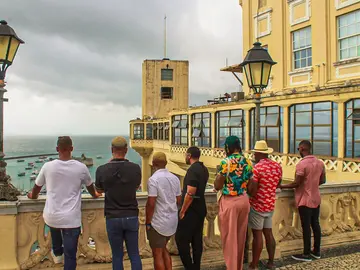
Most visitors base themselves in Copacabana or Ipanema, but the classic free walking tour of Rio takes place in the Centro, the old downtown that was capital of a Portuguese empire, then of Brazil. Groups meet in front of the Theatro Municipal on Cinelândia, by the clock tower in Largo da Carioca, or at Praça XV beside the Paço Imperial. Most walks last two and a half to three hours, and many are offered in English, Spanish and Portuguese.
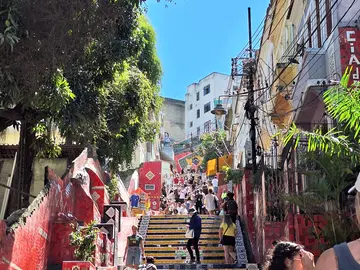
Guides tell the story of the city through its buildings: the palace where the Portuguese royal family ruled after fleeing Napoleon, the Arco do Teles and its colonial lanes, the belle-époque Confeitaria Colombo, the Real Gabinete Português de Leitura and the broad avenues cut through the old town in the early twentieth century. Most routes end in Lapa, under the white arches of the old aqueduct, at the Selarón Steps, covered in tiles from around the world by the Chilean artist Jorge Selarón.
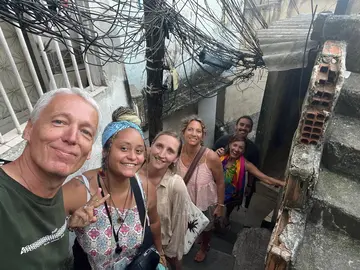
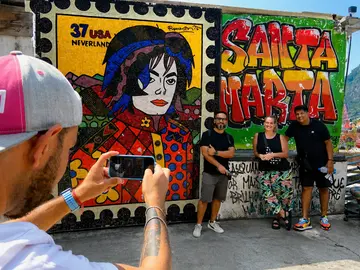
Beyond the Centro, Santa Teresa tours ride the old tram or climb to the hilltop barrio of artists' studios and bars, ending at the Selarón Steps. The Little Africa walks in the port area explain the history of slavery and Afro-Brazilian culture, from the Valongo Wharf to the Pedra do Sal, where samba took root. Residents also lead tours of their own communities in Rocinha, Santa Marta and Pavão-Pavãozinho–Cantagalo. Other walks focus on women in Brazilian history, a beach walk starting in Leme, or food and drink in Barra da Tijuca. For more of the country, see our Brazil overview, or compare with Buenos Aires.
The routes Rio guides walk
Historic Centro to the Selarón Steps
The essential two-and-a-half-to-three-hour introduction, starting at the Theatro Municipal, Largo da Carioca or Praça XV and usually ending in Lapa.
- Theatro Municipal and Cinelândia
- Confeitaria Colombo
- Praça XV and the Paço Imperial
- Arco do Teles
- Largo da Carioca
- Metropolitan Cathedral
- Arcos da Lapa
- Escadaria Selarón
Santa Teresa
Two and a half to three hours on the hill above the Centro, some starting with the tram from near Carioca metro, others at Largo dos Guimarães.
- Santa Teresa tram
- Largo dos Guimarães
- Artists' studios and street art
- Traditional neighbourhood bars
- Parque das Ruínas
- Escadaria Selarón
Little Africa
About two and a half hours in the port district on Afro-Brazilian history and culture, meeting at Praça Mauá or Praça XV.
- Praça XV
- Praça Mauá and the Rio Art Museum
- Largo da Prainha
- Pedra do Sal
- Valongo Wharf
When to join a tour in Rio
Rio is warm all year. From December to March it is hot and humid, with sudden afternoon downpours, so a morning tour is far more comfortable. June to August is cooler and drier, and the best time for long city walks. Carnival brings huge crowds and street parties to the Centro, so expect busier streets and road closures.
Plan Centro tours for weekdays, when the old downtown is full of office workers, shops and cafés. At weekends and after dark it empties out and feels much less comfortable, so leave Lapa's nightlife for a separate evening outing and take a taxi there.
Good to know
- Leave jewellery, watches and spare cards at your accommodation and carry only the cash you need.
- Keep your phone out of sight on the street; phone snatching is the most common problem for visitors.
- On community tours, go only with a resident guide, stay with the group and follow their advice on photos.
- Bring water, sunscreen and a hat; shade is patchy on the Centro's wide avenues.
- Use the metro to reach Centro tours from Copacabana or Ipanema: Cinelândia and Carioca stations are next to the main meeting points.
- Wear shoes with good grip for Santa Teresa's steep, cobbled streets and the Selarón Steps.
Self-guided walking tour of Rio de Janeiro (map-free route)
About 3 km and two to three hours, from Praça XV through the Centro to Lapa and the Selarón Steps. Walk it on a weekday in daylight.
- Praça XV and the Paço Imperialstart at the waterside square where the Portuguese court ruled Brazil.
- Arco do Telespass through the arch into a lane of old colonial houses and bars.
- Candelária churcha short detour north to the domed church at the end of Avenida Presidente Vargas.
- Confeitaria Colombolook inside the belle-époque café, all mirrors and stained glass, on Rua Gonçalves Dias.
- Real Gabinete Português de Leituraa few blocks west, a neo-Manueline reading room lined floor to ceiling with books.
- Largo da Cariocathe busy square below the hilltop Convent of Santo Antônio.
- Theatro Municipal and Cinelândiathe grand opera house faces the National Library and the Fine Arts Museum.
- Metropolitan Cathedralthe cone-shaped modern cathedral, whose stained-glass windows rise to the roof.
- Arcos da Lapathe white arches of the colonial aqueduct, now carrying the Santa Teresa tram.
- Escadaria Selarónfinish on the tiled staircase between Lapa and Santa Teresa.