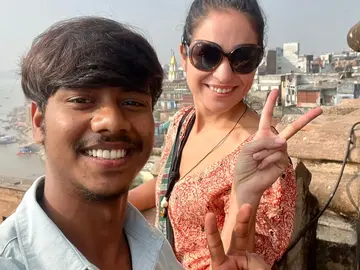
Hidden secrets of Varanasi: Vibrant tradition
📍 Starts: 16/16, Observatory · Guide: Badal
Book free spot Free · pay what you like
Dawn bathers, temple bells, lanes barely wider than a cow: Varanasi needs a guide who grew up with its stories.
Booking reserves your place; nothing is charged. Ratings and review counts from GuruWalk, updated 19 November 2026.
Most guides meet at St Thomas Church in Godowlia, the crossroads where traffic gives up and the old city begins. From there a walking tour of Varanasi slips into the galis, the narrow lanes between Godowlia and the Ganges, past small shrines, silk shops, tea stalls and vegetable sellers, and comes out on the ghats, the stone steps down to the river. Dashashwamedh, the busiest, appears on many routes. Others go further north to Panchganga Ghat and the Alamgir Mosque above it, call at the carved wooden Nepali Temple, or explore Bangali Tola, a lane known for its wall paintings. Expect two to three hours and plenty of mythology.
Several walks also include Manikarnika, the principal cremation ghat. Hindus believe that dying and being cremated in Kashi, the city's older name, can free the soul from rebirth, and funerals go on here day and night. Good guides explain this quietly, from a distance. These are families saying goodbye: take no photos or video, keep well back, speak softly and leave if you are asked to. If you'd rather not go, tell your guide at the start.
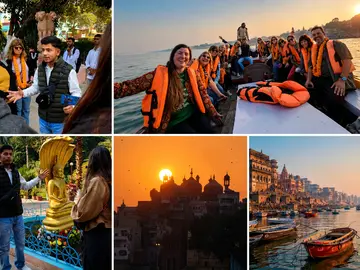
Beyond the classic Varanasi walking tour there are temple walks, a street-food tour, a sunrise outing from Assi Ghat with a boat ride, and evening walks that end with the Ganga Aarti, the lamp ceremony on the river. English is standard, two walks by the same guide are also offered in Russian, and two from Assi Ghat run in Spanish but not English. Our India page covers the rest of the country.
Three hours from St Thomas Church in Godowlia, in English or Russian, with mythology, music and crafts along the way. It includes the cremation ghat, so come prepared to be quiet there.
About two and a half hours from the Godowlia church, slower and more reflective, with a snack stop. It ends near the cremation ghat.
A three-hour early start that mixes a short drive, temples and a boat. The boat is charged per person on top, with a minimum of two people.
October to March is best. December and January mornings can be cold and wrapped in fog, which is beautiful but hides the sunrise. From April to June the heat is severe by mid-morning. In the monsoon, usually July to September, the Ganges rises over the lower steps, the ghats can no longer be walked end to end and boats may stop, so tours stay in the lanes.
Dawn and dusk are the hours to be by the river: bathers and prayers in the morning, the lamp ceremony after sunset. The lanes in between are good at any time of day. Around Dev Deepawali, the full moon of Kartik in autumn, the ghats are lit with lamps and extremely crowded.
About 4 km and two to three hours along the river from Assi Ghat north to Panchganga Ghat. Start at first light outside the monsoon, and take the lane above the steps wherever the riverside is blocked.