Free Tour of Zamora: Everything you can't miss about its history, origins, and personalities.
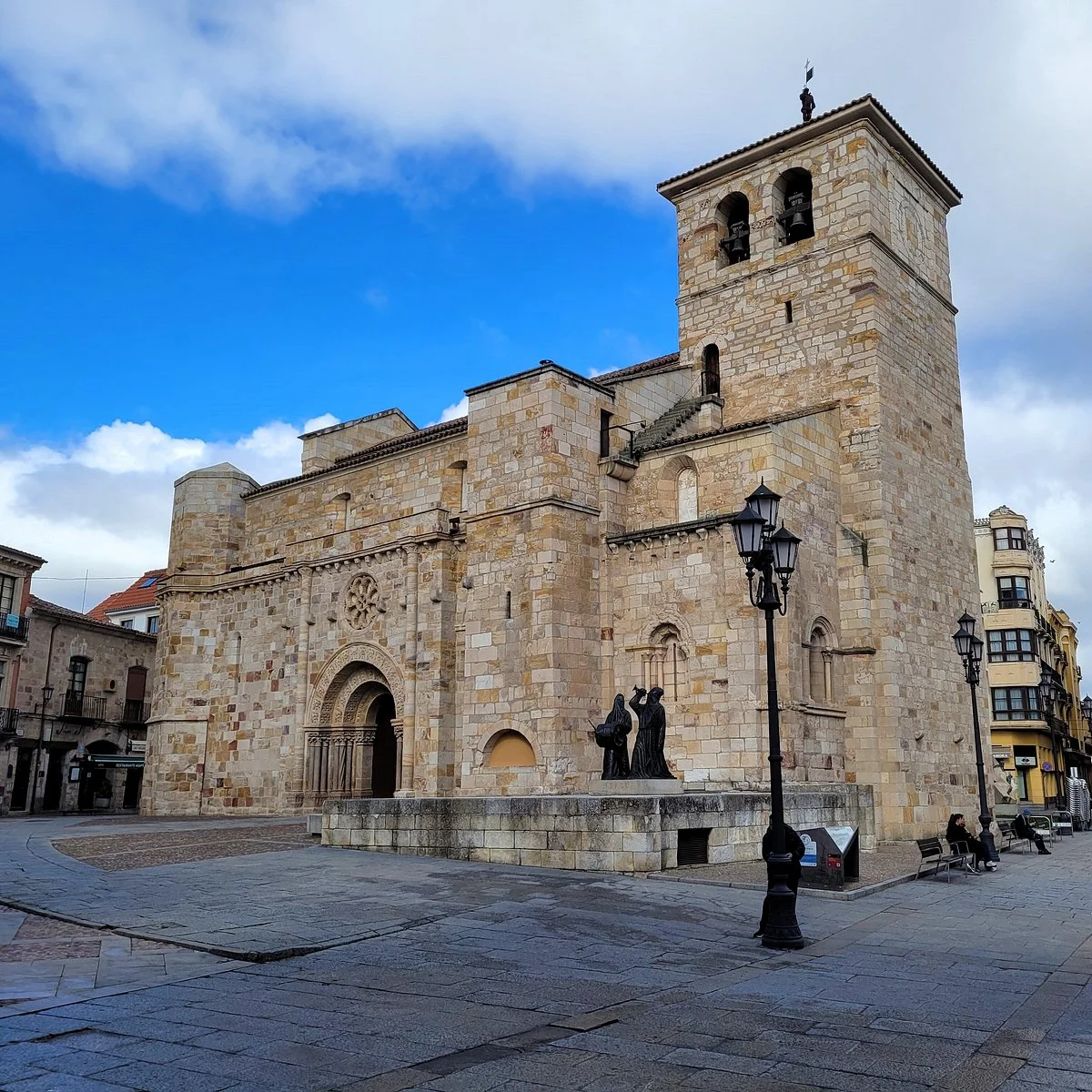
📍 Starts: Plaza Mayor de Zamora, 49004 Zamora · Guide: Tatiana
Book free spot Free · pay what you like
A walled hilltop city above the Duero, packed with Romanesque churches. Three tours, all in Spanish; our route below is in English.
Booking reserves your place; nothing is charged. Ratings and review counts from GuruWalk, updated 19 November 2026.
Zamora runs along a long rocky ridge above the Duero, ringed by medieval walls, and keeps more Romanesque churches than almost any city in Europe, around two dozen of them. It's also famous for its sombre, deeply traditional Holy Week, and for the stories of the eleventh-century siege of the city, Doña Urraca and El Cid.
There are three tip-based tours, all in Spanish, each about 90 minutes to 1 hour 45. Two follow almost the same route from the Plaza Mayor, starting by the statue of the Merlú, a Holy Week figure. They pass the Ramos Carrión theatre and Plaza de Viriato, named after the Lusitanian chief who fought Rome, then follow the old main street to the church of La Magdalena and San Pedro y San Ildefonso. Next come the castle, the cathedral with its scaled stone dome, the Portillo de la Lealtad, and the Puerta de Olivares with the house linked to El Cid. They finish at the Troncoso viewpoint over the river, or end at the Portillo.
The third tour starts at the late-Gothic Palacio de los Momos and leans on stories: the feud between two noble families in Plaza de Sagasta, Holy Week traditions, and Viriato. If you don't speak Spanish, follow our route below. Zamora pairs well with Salamanca and Valladolid; see all of Spain.
About 90 minutes to 1 hour 45 in Spanish, from the Merlú statue on Plaza Mayor along the ridge to the cathedral and the walls.
Ninety minutes in Spanish, from the Palacio de los Momos through the squares of the centre; for those who like stories more than dates.
Zamora has hot, dry summers and cold winters, so spring and autumn are the most comfortable seasons. In summer, take an early tour or wait for the evening, when the stone cools and the light over the Duero is best.
Holy Week transforms the city, with processions day and night and crowds to match. It's an extraordinary time to visit but book everything early, and expect tour routes to adapt around the processions.
About 2.5 km and an hour and a half with stops, from Plaza Mayor west along the ridge and down to the Duero.