Understand La Paz & El Alto | Daily Life & Cable Car
📍 Starts: GV28+P9C, C. Colon · Guide: Alpaca steps
Book free spot Free · pay what you like
A city poured into a canyon, with witches' stalls below and cable cars gliding overhead. Walk La Paz with a local.
Booking reserves your place; nothing is charged. Ratings and review counts from GuruWalk, updated 19 November 2026.
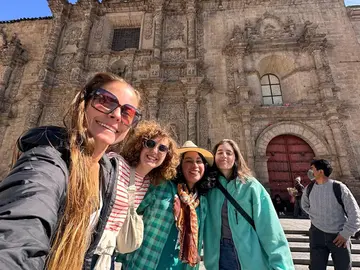
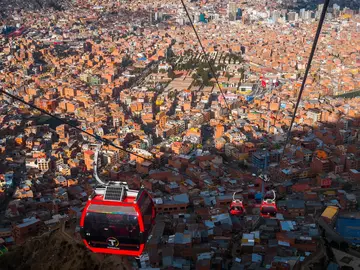
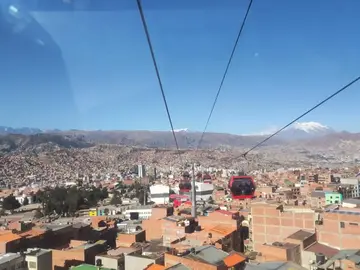
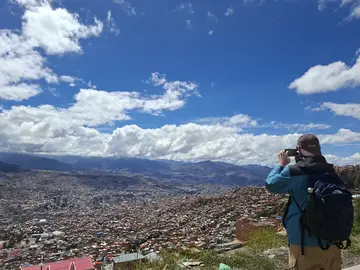
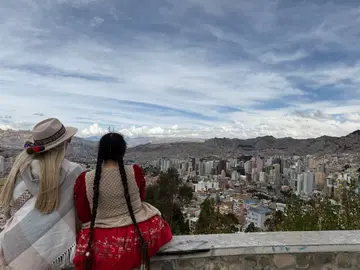
La Paz fills a steep bowl in the Altiplano, with the snow peak of Illimani on the horizon and the city of El Alto spread along the rim above. The classic free walking tour stays in the centre. Starting around Plaza San Francisco and Calle Sagarnaga, guides take you to the stalls of the Witches' Market on Calle Linares, the fruit and vegetable stands of the Rodríguez market, the outside of the notorious San Pedro Prison on Plaza Sucre, colonial Calle Jaén and Plaza Murillo, the seat of government.
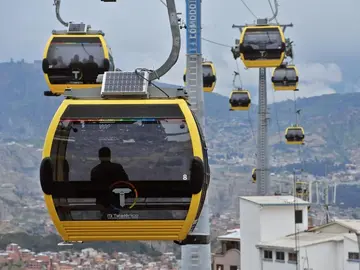
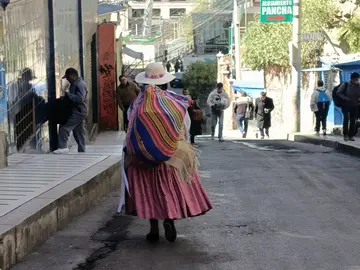
What sets La Paz apart is Mi Teleférico, the network of urban cable cars that locals use like a metro. Many tours now combine a walk with several lines, riding up to El Alto for its own witches' market and huge views back down into the canyon; on Thursdays and Sundays the sprawling 16 de Julio fair is in full swing up there. You pay your own cable-car fares, which are separate from the tip. Several walks focus on daily life rather than monuments, explaining Aymara traditions, informal commerce and the relationship between the two cities, and one is led from an Indigenous perspective.
Tours last two to three hours and most run in English and Spanish. There are also sunset rides across the whole cable-car network and an evening walk that ends with views of the lit-up city. For more of the high Andes, see Cusco, or read our Peru overview if you are crossing the border via Lake Titicaca.
A two-to-three-hour walk through the old centre, usually starting near Plaza San Francisco or Calle Sagarnaga, mixing colonial streets with busy markets.
Around three hours combining a short walk with several Mi Teleférico lines up to El Alto and back, for views and a look at daily life on the Altiplano. Fares are extra.
Evening options: a sunset ride across the cable-car network, and a night walk from the stadium area finishing with a cable car over the illuminated city. The night walk's listing doesn't name its stops beyond the start.
The dry season, roughly May to October, brings clear skies and the best mountain views, but nights and early mornings are cold, often near freezing in winter. From December to March the rainy season brings afternoon storms, so a morning tour is the safer choice.
Whatever the season, the sun is strong at this altitude and the temperature drops fast once it sets. Dress in layers you can peel off and put back on during the walk.
About 3 km and two to three hours with stops, from Calle Jaén through the centre to Plaza Sucre. The streets are steep, so go slowly at altitude.