Free tour of the historic center of the white city Sucre
📍 Starts: 00000, Sucre · Guide: Limbert
Book free spot Free · pay what you like
White arcades, chocolate shops and a hilltop view over terracotta roofs. Explore Bolivia's constitutional capital with a local guide.
Booking reserves your place; nothing is charged. Ratings and review counts from GuruWalk, updated 19 November 2026.
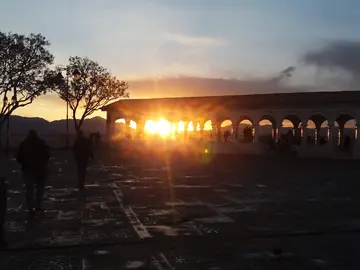
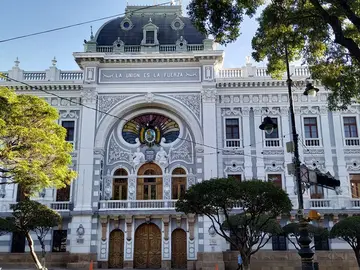
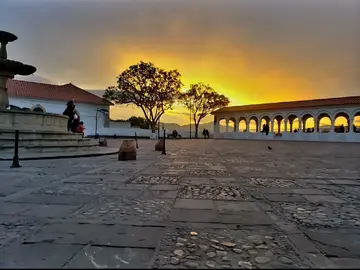
Sucre is the gentlest city in highland Bolivia for walking: a whitewashed UNESCO-listed grid with leafy squares and a manageable altitude of about 2,800 m. Most walking tours in Sucre begin on Plaza 25 de Mayo or at little Plaza Cochabamba, beside San Felipe Neri. They pass the Casa de la Libertad, where Bolivia's independence was declared in 1825, the cathedral and the university courtyards, then climb the old lanes to the arches of La Recoleta for the view.
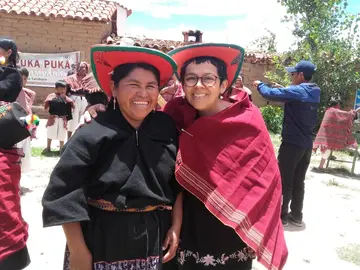
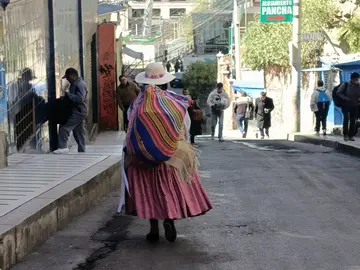
Guides add their own flavour on the way. Some stop in the Central Market for juice and fruit; others decode the woven textiles of the Jalq'a and Tarabuco communities, or tell legends in the Calle de los Gatos. One closes with a magic show at a viewpoint, another detours to a neighbourhood bar that visitors rarely find. Expect two and a half to three hours and plenty of political history, from the 1809 uprising to the long rivalry with La Paz over who is the real capital.
There is more choice than you might expect. Food walks take in api, salteñas and chocolate, night tours explore tunnels, alleys and chicherías, and on Sundays one guide leads a trip by public transport to the Indigenous market at Tarabuco. Because Sucre draws so many language students, tours run in English, Spanish, French and German. Read our Bolivia overview for the wider picture, or see La Paz, a very different kind of city.
The classic three-hour walk in English, from Plaza 25 de Mayo uphill to the viewpoint. Other guides cover similar ground in Spanish, French or German.
Around three and a half hours in English, Spanish or French, from La Recoleta square down to the centre, with politics and optional drinks. Two Spanish-language night walks focus on illuminated buildings, alleys and tunnels.
A food tour of about three and a half hours in English, Spanish or French, beginning on Plaza 25 de Mayo and using local buses. Food and fares are extra.
Sucre has an easy climate by Andean standards: mild, sunny days and cool nights. The dry season runs roughly from May to October, with the clearest skies over the rooftops. From December to March expect showers, often later in the day, so a morning walk with a rain jacket in your bag makes sense.
Sundays and public holidays change some routes because not every building opens, and one guide says so in the listing. They are also the day for Tarabuco. Around 25 May, the city's own holiday, and the September fiesta of the Virgin of Guadalupe, dance parades and crowds take over the centre.
About 3 km and two to three hours, from Parque Bolívar through the centre and up to La Recoleta. The last stretch is uphill.