Free Historical-Multicultural Tour of the Old City of Tetuan
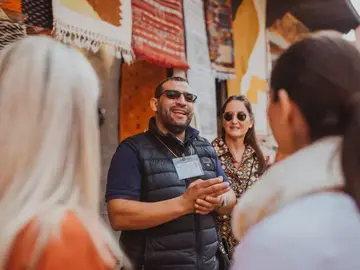
📍 Starts: HJCG+22P, Pl. Moulay El Mehdi · Guide: Hassan
Book free spot Free · pay what you like
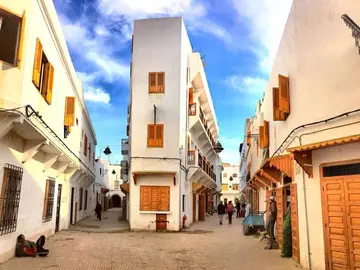
Morocco's most Andalusian medina, with whitewashed lanes, working tanneries and few crowds. Local guides walk you through in two hours.
Booking reserves your place; nothing is charged. Ratings and review counts from GuruWalk, updated 19 November 2026.
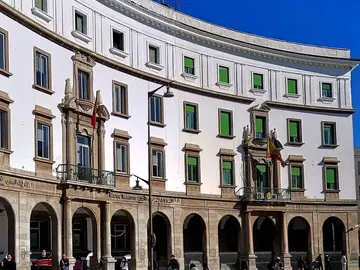
Tetouan sits between the Rif mountains and the Mediterranean, an hour or so from Tangier, and most travellers skip it on the way to Chefchaouen. Their loss. The town was rebuilt at the end of the fifteenth century by Muslims and Jews who had fled Granada, and its white medina, known as the White Dove, still feels close to Andalusia. In the twentieth century it became the capital of the Spanish protectorate in northern Morocco, which added a second town of balconied avenues next to the old one. A Tetouan walking tour shows you both.
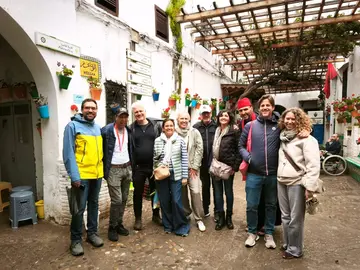
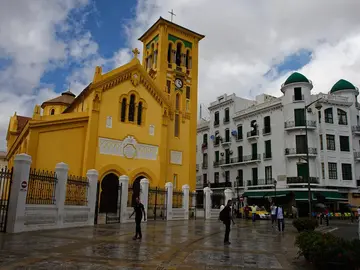
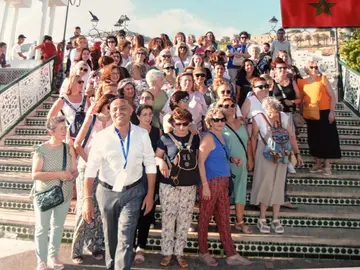
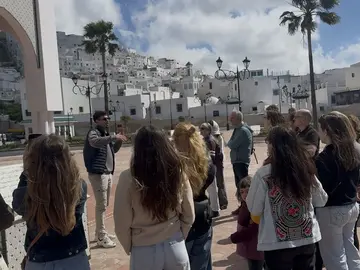
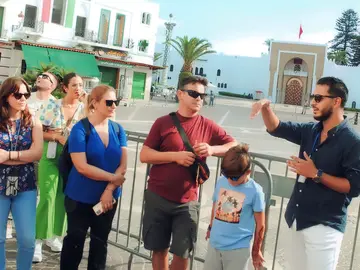
Nearly every tour starts at the door of the church of Our Lady of Victories on Plaza Moulay el Mehdi, the hub of the Spanish-built Ensanche; one meets by the Bab Rouah gate instead. Walks last two to two and a half hours. The usual route crosses to the Royal Palace on Place Hassan II, enters the medina through one of its seven gates and passes the Mellah, the old Jewish quarter, the alleys of the Andalusian noble houses and the craftsmen's quarter of Jarazin. It continues to the tanneries, where hides are still worked by hand, and to Tarrafine, the street of goldsmiths. Some guides add the Great Mosque, a traditional oven or the kasbah built by the town's founder.
Four of the tours run in English, often alongside Spanish, French and Italian; the other four are in Spanish only, which reflects how many visitors come over from Spain. Guides know the artisans well, and one route includes a short stop for shopping. If you'd rather not browse, say so at the start. For more of the north, see our pages on Tangier, Chefchaouen and Morocco.
The classic two- to two-and-a-half-hour walk from Our Lady of Victories, in English and several other languages. It covers the Jewish, Andalusian and craft quarters before returning through the Ensanche.
Two and a half hours from the same church, in English, Spanish, French, Italian or Portuguese, focused on the twentieth-century town and how it grew around the medina. It still dips into the tanneries and the Jewish quarter.
A two-hour Spanish-language tour from Bab Rouah, on Avenue Mohamed Ben Larbi Torres, ending in the Ensanche.
Morning is the best time: the medina's food stalls and workshops are at their busiest, and the tanneries are working. Friday midday is quieter, with many shops closing for prayers, and during Ramadan the rhythm of the day shifts later.
Spring and autumn are the most comfortable seasons. Summer is warm but tempered by the sea, and the town fills with Moroccan holidaymakers heading for the nearby beaches. Winter brings rain, so pack shoes that grip on wet stone.
About 3 km and two to two and a half hours, starting at Plaza Moulay el Mehdi and ending at Bab Okla. Walk it by day; the medina lanes are easier to navigate in daylight.