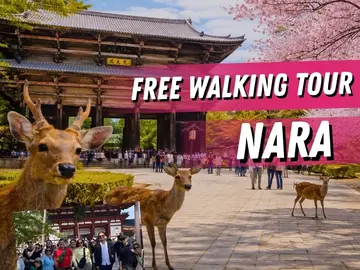
Free walking tours in Nara

Bowing deer, a giant bronze Buddha and quiet merchant lanes, all within walking distance of the station.

  • 🚶 6 free tours
  • ★ 4.71 average
  • 💬 230 reviews
  • 🗣 Spanish, English, Portuguese

Free walking tours in Nara

Booking reserves your place; nothing is charged. Ratings and review counts from GuruWalk, updated 19 November 2026.

What a Nara walking tour covers

Nara was Japan's capital for most of the eighth century, before the court moved on and eventually settled in Kyoto. What it left behind sits in one big park: temples, a Shinto shrine and more than a thousand deer, long treated as messengers of the gods. Every Nara walking tour has the deer in common, and good guides also explain how Buddhism and Shinto came to share the same hillside, which is hard to work out from the signs alone.

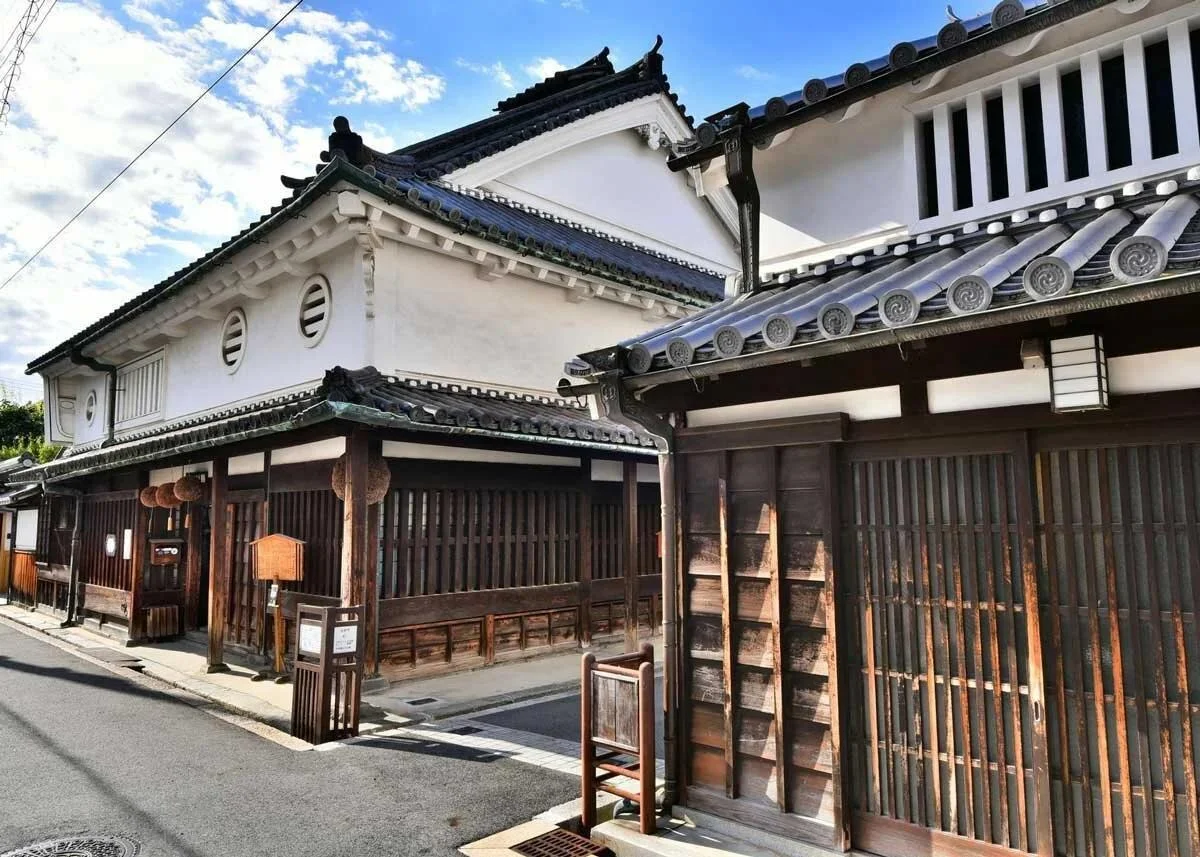
The selection is small, and language decides a lot. One free walking tour in Nara is in English only: a morning walk for up to eight people from Kintetsu Nara Station to Todai-ji, its Great Buddha and Kasuga Taisha, with both entrance fees paid on top, the guide's included. A walk from Sarusawa Pond is offered in English or Spanish and needs no tickets, as it ends outside Todai-ji. A third, also in English, leaves the park for Naramachi, the old merchant quarter, with Gango-ji temple, townhouses and an optional sake tasting. The remaining three are in Spanish, one of them also in Portuguese; that one needs at least four people.

Tours take two to three hours, which makes Nara an easy half-day trip from Kyoto or Osaka, though the park is at its best once the day-trippers leave. See our Japan page for other cities.

The routes Nara guides walk

Deer park, Great Buddha and Kasuga Taisha

About two and a half to three hours in the morning, in English, from Kintetsu Nara Station. The most complete first visit; carry cash for admissions. It is cancelled if heavy rain is forecast.

  1. Kintetsu Nara Station
  2. Nara Park
  3. Todai-ji Nandaimon Gate
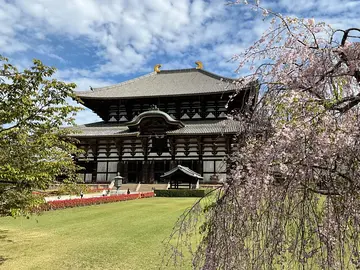
  4. Great Buddha Hall (Daibutsuden)
  5. Kasuga Taisha

Sarusawa Pond to Todai-ji

Two and a half hours in English or Spanish, on history, religion and deer manners, with no paid entrances on the way.

  1. Sarusawa Pond
  2. Kofuku-ji
  3. Nara National Museum
  4. Nara Park
  5. Todai-ji

Naramachi old town and sake

Two and a half hours in English from Sarusawa Pond. You pay the Gango-ji admission and, if you want it, a tasting at a brewery.

  1. Sarusawa Pond
  2. Isagawa Jizo
  3. Gango-ji Temple
  4. Naramachi Nigiwai-no-Ie
  5. Nara Town Museum
  6. Koshindo
  7. Naramachi Koshi-no-Ie

When to join a tour in Nara

Late March to May and October to November are the best months, with cherry blossom in early April and red maples in November. Summer is hot and humid, and the park gives only patchy shade. Winter is cold but clear and by far the quietest time. Expect rain in June and early July.

Mornings are calmer and the deer hungrier; by late morning tour groups fill the path to Todai-ji. Deer behaviour follows the calendar as well: mothers with fawns in early summer and stags in autumn need more space than usual.

Good to know

  • Feed the deer only the crackers sold in the park, show empty hands when they are gone, and keep maps and paper bags out of reach.
  • Kintetsu Nara Station is much closer to the park than JR Nara Station; allow extra time if you arrive at the second.
  • Check the exact exit for your meeting point, because tours use different exits of the same station.
  • The tours are on foot for up to three hours, with steps at Nigatsu-do and gravel paths at Kasuga Taisha, so choose comfortable shoes.
  • Spanish-only walks share the list with English ones; confirm the language before you book.

Self-guided walking tour of Nara

About 7 km and four to five hours with visits, from Kintetsu Nara Station round the park and back to Naramachi. Follow the stops in order as your Nara walking tour map.
  1. Kofuku-jia great temple of the Fujiwara clan, now open ground with halls and grazing deer.
  2. Todai-ji Nandaimonthe massive wooden south gate, with two fierce guardian figures inside.
  3. Great Buddha Hallone of the largest wooden buildings in the world, sheltering a bronze Buddha about 15 metres high.
  4. Nigatsu-doclimb to its balcony for a wide view over the roofs of Nara.
  5. Tamukeyama Hachimangua small shrine among maples, at the foot of grassy Mount Wakakusa.
  6. Kasuga Taishavermilion halls in the forest, approached between thousands of stone lanterns.
  7. Ukimidoa hexagonal pavilion reflected in a pond, on a quiet side of the park.
  8. Sarusawa Pondwillows, turtles and a favourite place to rest.
  9. Gango-jione of Japan's oldest temples, with some ancient tiles still on its roof.
  10. Naramachifinish in the lanes of latticed townhouses, looking for red cloth monkeys hung from the eaves.

Nara free tours: questions people ask

Is there a free walking tour in Nara, Japan?
Yes, a few. English tours visit the deer park and Todai-ji or the Naramachi quarter, and others are in Spanish or Portuguese. They are tip-based, with temple fees on top.
Is there a Nara deer park walking tour in English?
Yes. One morning walk covers the park, the Great Buddha and Kasuga Taisha in English, and another from Sarusawa Pond to Todai-ji is offered in English or Spanish.
Can I do a self-guided walking tour of Nara?
Yes, and it is simple. Our 7 km route starts at Kintetsu Nara Station and links the temples, the shrine and Naramachi, mostly on park paths.
Is there a Nara walking tour map?
Use the ten stops above as a map: they run east through the park from Kofuku-ji to Kasuga Taisha and back to the old town.
Can I see Nara in a half-day walking tour?
Yes. A tour takes two to three hours and covers the main sights. Add an hour or two for Naramachi or Nigatsu-do if your train allows.
Do you tip on a free walking tour in Nara?
Yes. Tipping isn't usual in Japan, but these guides work for tips: ¥1,000–2,000 per person in cash is fair, plus any temple fees.

More free tours in Japan

All Japan cities →
Book a free tour in Nara