History of Nagasaki Walking Tour
📍 Starts: 3-94 Matsuyamamachi, Nagasaki · Guide: M2N Tours
Book free spot Free · pay what you like
In the Urakami valley, quiet parks mark where the atomic bomb fell. A local guide explains what happened here.
Booking reserves your place; nothing is charged. Ratings and review counts from GuruWalk, updated 19 November 2026.
At 11:02 on the morning of 9 August 1945, an atomic bomb exploded about 500 metres above the Urakami district of Nagasaki, three days after Hiroshima. Every current Nagasaki walking tour begins close to that point, in the Matsuyama area at the north of the city, and all three tip-based tours run in English for about two hours. The choice is small, but each walk takes a slightly different angle on the same ground.
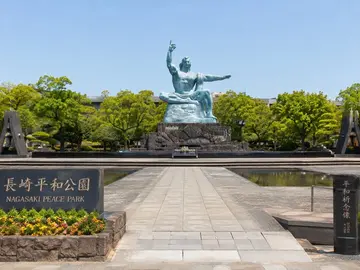
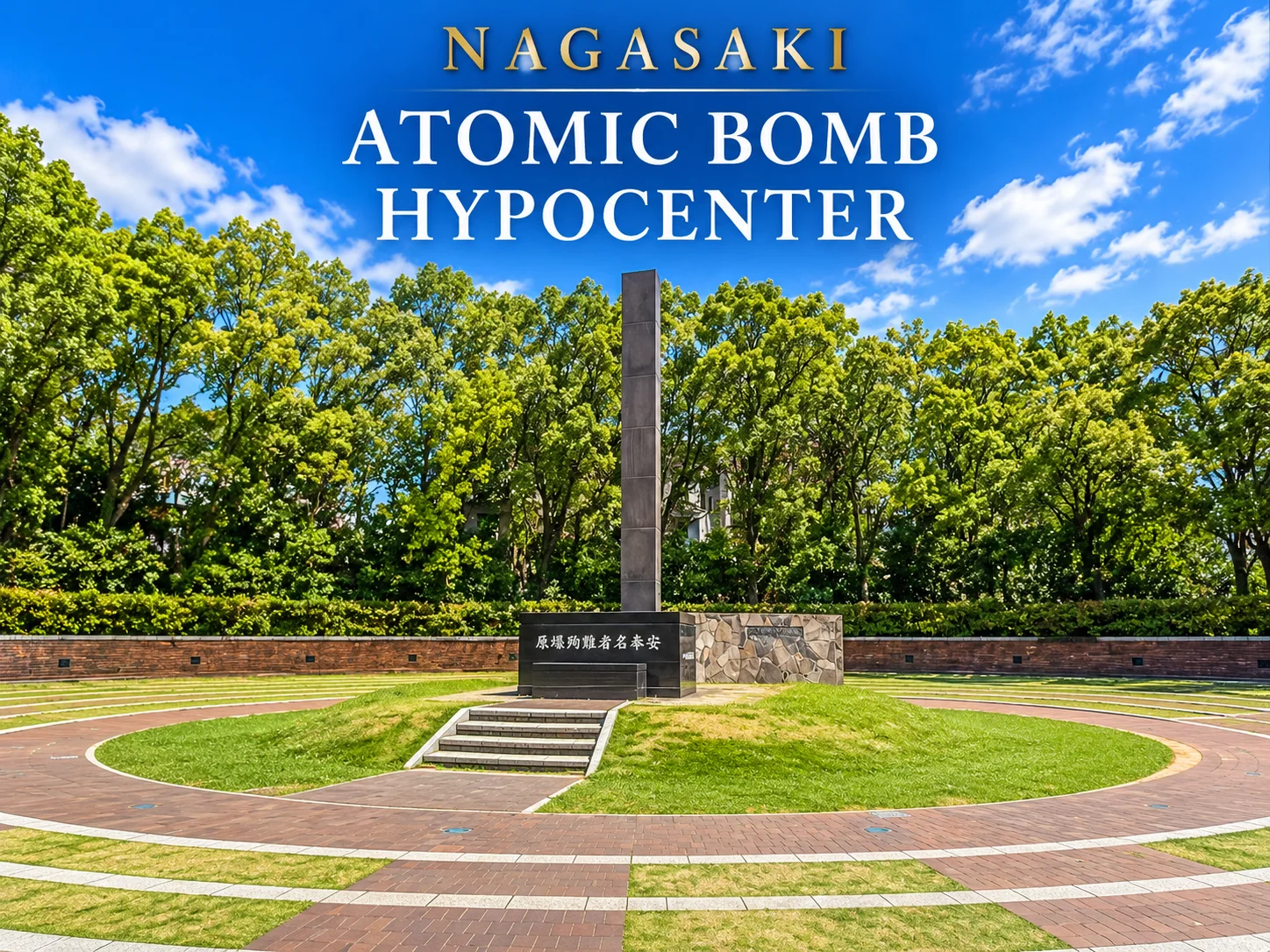
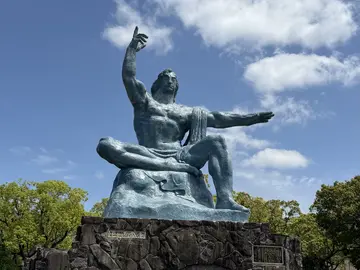
The most detailed itinerary starts at the Hypocenter, where a plain black stone column marks the spot beneath the explosion. From there it visits the remains of the old Urakami Cathedral, once one of the largest churches in East Asia, a section of ground preserved to show the layers of debris, statues and memorials, and a preserved air-raid shelter. It then climbs to Peace Park, with statues given by countries around the world, the Peace Bell, the great seated Peace Statue, whose raised hand points to the threat from above and outstretched hand signals peace, and the Fountain of Peace, built for victims who died begging for water. Entry to the museum is not included in the tour.
A second walk centres on Peace Park and the Cenotaph for the A-bomb Victims, with time to pause and pay respects. The third connects the bombing to Nagasaki's longer story of foreign trade, Christianity and cultural exchange, and to the city's recovery, mixing the memorials with quieter streets and views. Guides handle the subject with care and leave room for questions. For more of Japan, see Hiroshima, Kyoto or our Japan page.
About two hours from the Hypocenter monument, covering the area around ground zero before climbing to Peace Park. Some accounts are distressing, but the walk suits older children.
About two hours starting opposite the Peace Park entrance, focused on the park's monuments and the Cenotaph for the A-bomb Victims.
About two hours from the Hypocenter, linking the bombing with the city's international history. The listing names Peace Park and its memorial areas but not its other stops.
Spring and autumn are the most comfortable seasons. The rainy season usually arrives in June, and July and August are hot and humid, with little shade on the climb to Peace Park; a morning tour is easier then. Nagasaki is one of the wetter cities in Japan, so pack an umbrella in any month.
On 9 August each year the city holds its Peace Memorial Ceremony in Peace Park, and the area is busy and solemn, so check whether tours are running that day. Around the Lunar New Year, the harbour side of town is lit with thousands of lanterns for the Lantern Festival, which brings crowds to the centre.
About 3 km and two to three hours, from Spectacles Bridge to Glover Garden. The tours cover the Urakami memorials; this route shows the trading port that shaped the city.